MINISTRY OF HEALTH ISSUES NATIONAL GUIDELINES ON SCREENING AND MANAGEMENT OF GESTATIONAL DIABETES
CONTEXT OF ISSUANCE AND POLICY SIGNIFICANCE
The Ministry of Health has officially issued the National Guidelines on Screening, Diagnosis, and Management of Gestational Diabetes, aimed at standardizing professional practice and improving the quality of maternal and neonatal healthcare nationwide. This document was developed based on updated scientific evidence and practical experience from various healthcare facilities across the country.
The issuance of the national guidelines marks a significant step forward in the strategy to prevent and control complications related to gestational diabetes, while providing a legal and professional basis for synchronized implementation across all levels of the healthcare system.
CURRENT SITUATION AND REQUIREMENTS IN MATERNAL HEALTHCARE
Gestational diabetes is an increasingly prevalent public health concern, particularly in the context of rising rates of overweight, obesity, and sedentary lifestyles. If not detected and managed in a timely manner, this condition can lead to various complications for both mother and fetus, including preeclampsia, preterm birth, macrosomia, and increased risk of developing type 2 diabetes postpartum.
Practical implementation at many healthcare facilities has revealed disparities in screening procedures, counseling, and monitoring, highlighting the urgent need for unified guidelines appropriate to clinical practice conditions in Vietnam.
IMPLEMENTATION WORKSHOP AND EXPERIENCE SHARING
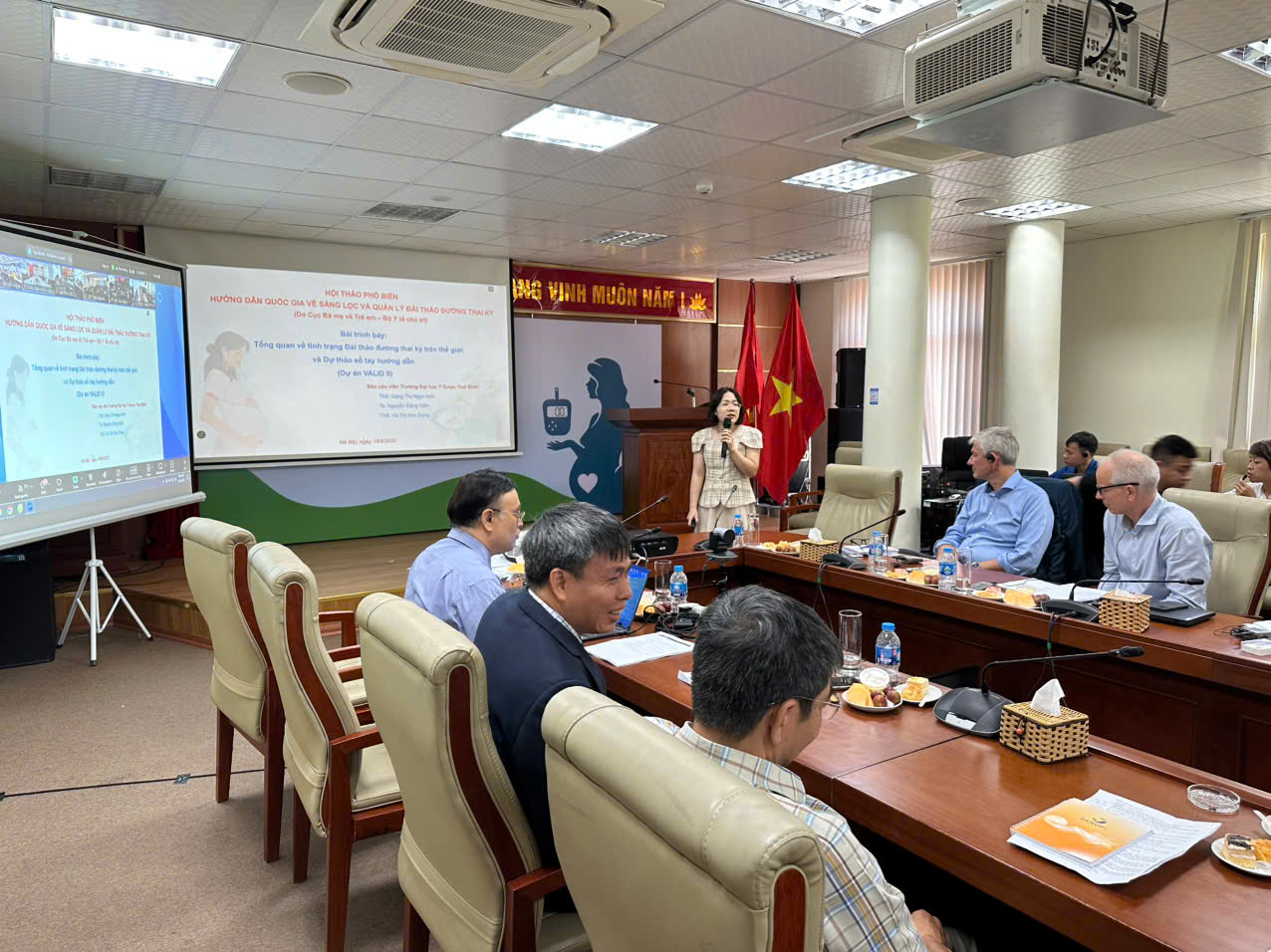
As part of the implementation of the new guidelines, the Ministry of Health organized a professional workshop with the participation of leading experts, representatives from hospitals, medical universities, and related research projects. The workshop focused on discussing the core content of the guidelines, challenges in implementation at facility level, and solutions to enhance the effectiveness of gestational diabetes management in clinical practice.
Opinions at the workshop emphasized the role of continuous training for healthcare workers, enhanced counseling for pregnant women, and the application of community-based and digital intervention models.
CONTRIBUTIONS OF THE VALID PROJECT
The VALID Project research team was honored to be invited by the Ministry of Health to participate in the workshop and present research findings, implementation experiences, and practical lessons learned from project activities. These results provide real-world evidence on the feasibility and effectiveness of non-pharmacological interventions in the management of gestational diabetes in Vietnam.
The contributions from the VALID Project helped clarify the role of self-care support models, health education, and interdisciplinary coordination in improving the quality of care for pregnant women with gestational diabetes.
CONCLUSION AND FUTURE DIRECTIONS
The issuance of the National Guidelines on Screening and Management of Gestational Diabetes is an important step, establishing a foundation for standardizing practice and improving maternal and neonatal health outcomes. In the coming period, effective implementation of the guidelines will require close coordination among regulatory agencies, training institutions, research units, and healthcare systems at all levels.
The results and experiences from the VALID Project will continue to be utilized and expanded, contributing to the process of refining policies and maternal healthcare practices in Vietnam.